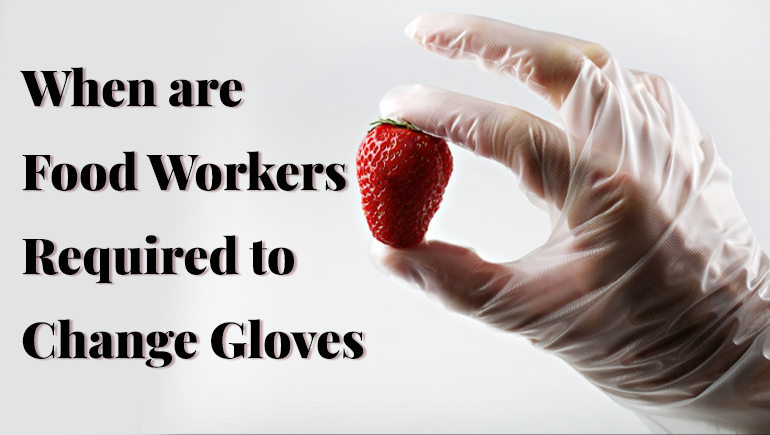
Food safety is not only a regulation; it is the main element of any successful kitchen. The difference between serving customers fresh, safe food and risking a costly contamination can lie in knowing when the food workers should change gloves. Recognized food chains have been in the game because they understand life-threatening conditions, the importance of keeping food safe, and efficient ways of maintaining health code compliance. After all, dirty gloves can be just as dangerous as dirty hands.
Remember, a single touch can make a difference: raw meats, fresh produce, packaging, even your phone - all of them can be contaminated with harmful bacteria unless gloves are changed at the appropriate time. Understanding appropriate glove-changing procedures is extremely important, regardless of whether you're a new hire, a seasoned food handler, or getting ready for a food safety certification exam. This guide will enable food handlers to take charge of their actions, avoid cross-contamination, and ensure perfect hygiene during a shift.
Gloves can only work when they are well worn - they need to be clean, intact, and changed as dictated by the food safety rules. By wearing gloves correctly, food handlers alleviate the probability of food-borne diseases, maintain high standards of sanitation, and serve customers safe and reliable meals. Yes, it significantly assists in compliance and the reputation of the profession in any food service setting.
| Situation | Change Gloves? | Reason |
| Handling raw chicken | ✔ Yes | Prevent bacterial transfer |
| Touching the cash register | ✔ Yes | High contamination risk |
| Moving from cutting veggies to assembling sandwiches | ✔ Yes | High contamination risk |
| Gloves tear during prep | ✔ Yes | Barrier compromised |
| Meal break | ✔ Yes | Reset for food safety |
| Only handing wrappers to customers | ✘ No (if no food contact) | No food‑contact risk |
Let's answer this major question, “When are food workers required to change gloves?” in detail for food handlers.
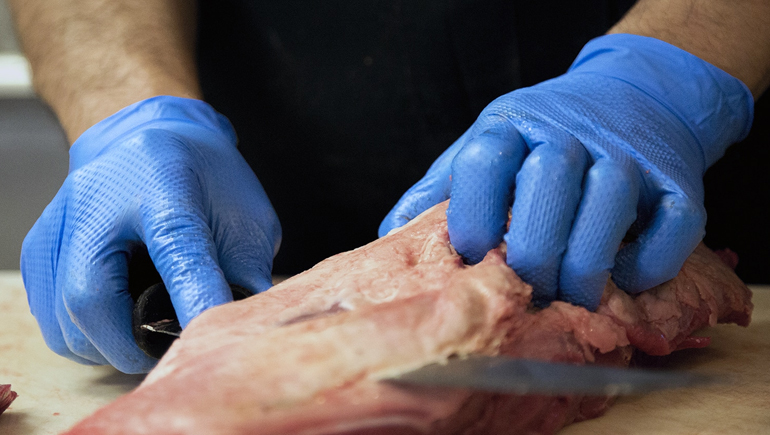
Whenever a food worker comes in contact with raw products and then has to immediately handle ready-to-eat products (such as salads, sandwiches, desserts, etc.), gloves need to be changed.
Raw meat, poultry, and seafood may harbor bad bacteria that may contaminate other cooked or processed foods. A quick glove change will retain a protective layer to avoid cross-contamination. Well, the worker must remove gloves, wash hands thoroughly, dry with a clean towel, and then put on a fresh pair.
Bacteria can be transferred to food from items such as cash registers, phones, buttons, trash bins, or cleaning tools. Even touching hair or face may render gloves unsafe to handle food. It is advised to always change gloves after touching non-food items to keep foodborne disease at bay.
Furthermore, food should never come into contact with cleaning agents. Food handlers should swap out their gloves right away. It could be a cleaning spray, degreaser, or sanitizer! Before they can resume preparing food, they must take off their contaminated gloves.
Germs that infect gloves can be carried by respiratory droplets. Food handlers should swap out their gloves right away after:
When soiled or torn, gloves do not work well. In short, slimy, sticky, torn, or obviously dirty gloves can not protect food. Holes can be as small as a spot, and bacteria can enter the food and contaminate it directly. Moreover, breaks expose the gloves to possible body contamination, surface contamination, or clothing contamination. Change gloves as they get torn and dirty so as to maintain office hygiene and kitchen health.
When switching from one step in food preparation to the next (this means that when chopping is replaced by plating or doing garnishes), get a new pair of gloves for yourself. This eliminates the transference of bacteria or allergens between tasks.
Allergies to certain foods might be fatal. To avoid allergen cross-contact, a worker managing one allergen (such as peanuts, tree nuts, milk, eggs, fish, etc.) and then another food item needs to switch gloves. We are not asking for a complete uniform change, but only a pair of gloves.
Example: After making a peanut butter sandwich, a worker uses the same gloves to quickly put together a peanut-free sandwich. A consumer may experience a severe allergic reaction as a result of this.
Food safety regulations typically call for changing gloves after prolonged use, even if they seem clean. Gloves should be replaced at least every four hours while handling food continually because they can accumulate sweat, moisture, bacteria, and food leftovers over time. Food quality and hygiene are preserved with regular replacement.
Bonus: First of all, gloves are not long-term protective gear; rather, they are single-use products. Second, washing your hands properly is always preferable to wearing gloves.
Read More: Different Types of Towel Materials: Which One Actually Fits Your Lifestyle?
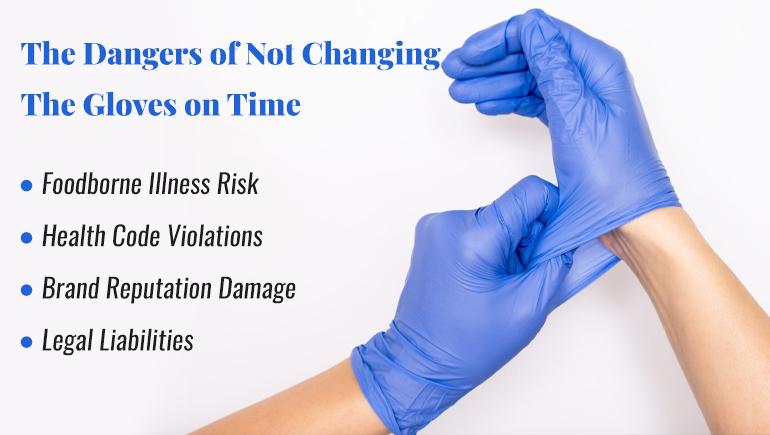
The inability to change gloves could result in severe health, legal, and reputational consequences. Any simple negligence can lead to bacteria or contamination spreading, exposing your customers and business to risks.
The following are feasible methods through which the best practices of gloving can be integrated:
It is not theoretical knowledge of when and how food workers ought to change gloves, but a very important practice that should be conducted daily. Through the regular observance of the right glove-changing procedures, the kitchens are likely to make a major step forward in reducing the risk of contamination and to make staff members more confident about food safety.
Making glove changing a habitual practice facilitates hygiene, prevents cross-contamination, and reinforces adherence to health-related regulations. The ultimate result is a healthier and more reliable food service experience for employees and customers.
To obtain specific services, such as custom gear for food safety and tailored packaging materials, call Vel Clothing at +804-298-1966. Be smart, be safe, and continue bringing excellence.