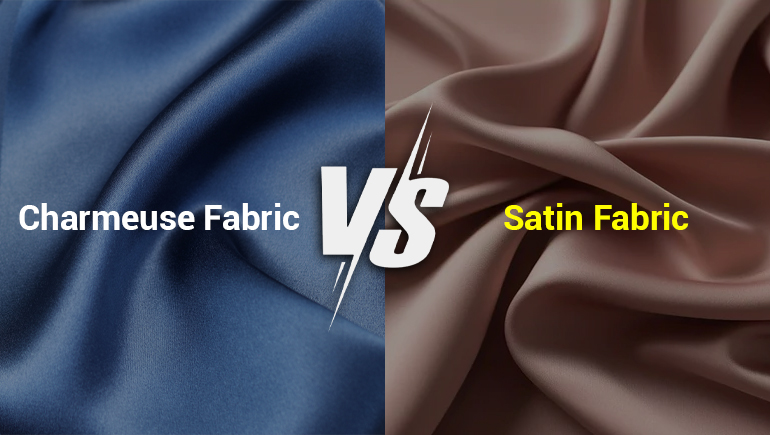
Fashionistas, artists, designers, and sewing aficionados frequently discuss charmeuse versus satin fabric when it comes to opulent, glossy, and beautiful textiles. Although both materials radiate grace, each has its own personality, charisma, and peculiarities. Knowing the variance between satin and charmeuse can make all the world of difference, whether you're planning a sexy evening costume, a stylish blouse, or a comfortable yet sparkly slip dress.
Let’s dive into this silky world and see what sets them apart.
Pro Tip: Charmeuse is typically softer and more delicate in nature, making it perfect for clothing that touches the skin. Satin is suitable for dramatic silhouettes because it endures structure better, particularly cotton satin or bridal satin fabric.
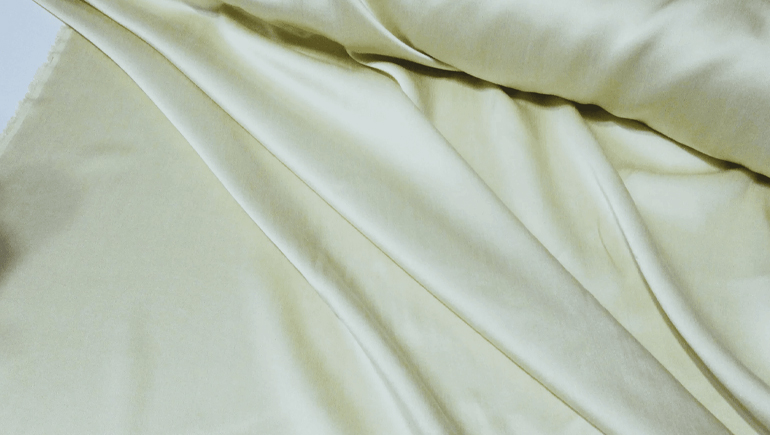
Although charmeuse fabric appears to be similar to satin at first, it is quite different. It is a staple for lingerie, blouses, and flowing dresses because of its incredibly smooth + glossy front and matte back, which feel like a soft touch against the skin.
Its lighter, tighter satin weave creates a graceful drape, along with offering a buttery softness. The matte back provides a gentle contrast to the glossy front, which captures light like liquid silk. With regard to its structure, charmeuse clings to the body in an enchanting manner, making it ideal for evening wear, blouses, and slinky dresses.

Another classic of velvety, silky textiles is satin fabric, which is distinguished more by its weave than by its material. It has a shiny front and a dull back, and it is usually composed of silk, polyester, or even cotton. Satin can keep its shape well and feels heavier and more structured than charmeuse.
Satin fabric provides a sumptuous color scheme that complements all styles, moods, and occasions. The possibilities are numerous, ranging from sleek black satin that provides an edgy vibe to immaculate white satin that evokes classic purity and poise.
Deep purple satin adds a majestic, enigmatic charm, while rich royal blue satin carries a classic, tranquil touch. Bright orange satin adds coziness and playfulness, while vivid red satin expresses passion and intensity, making it ideal for showpiece items.
Satin combines luxury, texture, and aesthetic appeal in a single silky sweep, allowing you to experiment with every shade you can imagine.
Now, let’s get down to the juicy part: how do you actually tell charmeuse vs satin fabric apart?
| Feature | Charmeuse Fabric | Satin Fabric |
| Origin | Traditionally made of silk, more recent iterations contain mixes of polyester. | Defined by the method of weaving, it may be cotton, silk, or polyester. |
| Sheen & Texture | Creamy smooth, glossy front, and delicate + matte back |
Dull back, glossy front; usually more rigid and heavier than charmeuse |
| Drape | Lightweight, flowing, and clingy | In relation to the material, medium to heavy, and more structured |
| Best Uses | Blouses, nightwear, lingerie, and slip dresses | Sarees, wedding gowns, evening wear, and structured clothing |
| Comfort |
Luxuriously soft and skin-friendly |
Cotton satin is more breathable; it is clean and velvety but may feel heavier. |
| Care | For silk charmeuse, dry cleaning is advised; polyester equivalents are simpler. | Polyester satin is simpler to wash, whereas silk satin needs to be handled carefully. |
Feeling your fabric is sometimes the greatest way to understand it. From a distance, satin and charmeuse look remarkably comparable, but a brief touch test reveals their actual characteristics.
Charmeuse has a buttery-smooth texture when you run your fingertips over it. It has a flow that is silken, delicate, and nearly liquid (like something that feels light on the skin_. Satin also has a reflective, glossy surface. But under your fingers, it seems quite firmer. It keeps its shape well and doesn't cling as much as charmeuse. Although the back is satin-like, it feels less "meltingly soft" than charmeuse and is duller, making a slight distinction.
Do you need a quick tip? Satin produces sharper, cleaner folds than Charmeuse, which folds easily with delicate curves.
Your price can be a major factor when choosing between charmeuse and satin, but quality doesn't necessarily have to be expensive. To let you know what to anticipate, let's break it down:
Silk charmeuse has an exemplary texture and finesse when used to create luxury items or designer clothing that touches the skin. Polyester charmeuse or polyester satin offers style, gloss, and affordability for projects on a tight budget or for regular glamorous wear.
Read More: 13 Different Types of Taffeta Fabric Explained
Here's a brief guide to washing satin fabric if you're wondering:
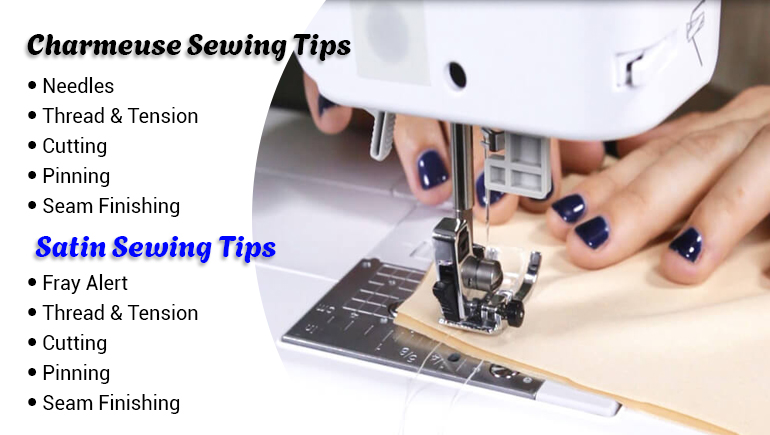
It might be challenging to work with such materials, but the results are attire that feels and looks upscale. This is your comprehensive guide to becoming an expert at cutting and sewing them:
Charmeuse can move during cutting or stitching since it is soft, thin, and slippery beneath your fingertips and sewing machine foot.
Expert Advice: Always start with a throwaway piece! Satin and charmeuse respond differently based on finish, weight, and fiber composition. Sewing these materials is like painting with silk once you get the hang of it; the results are exquisite and effortless. After all, practice makes perfect.
Both charmeuse and satin add luxury and drama to your wardrobe, whether you're drawn to the lavish, glossy appeal of wedding satin fabric, the buttery texture of silk charmeuse fabric, or the versatility of stretch charmeuse fabric. Your next costume should include a touch of splendor, so choose your clothes carefully and look magnificent!
Explore our wide range of fabrics at Vel Clothing and find your dream texture today. We have the fabrics that let your works pop, from glitzy satin to soft silk charmeuse.