You've come to the perfect place if you've ever questioned what makes your garden weed-free, your jeans durable, or your signature jacket comfortable. Types of woven fabric are the foundation of fashion, utility, and amazing textile inventions; they are more than just strands on a loom. Let's untangle the woven universe together, whether you're a weaver, fabric nerd, artist, buyer, or just a curious person!
Let's start with the fundamentals!
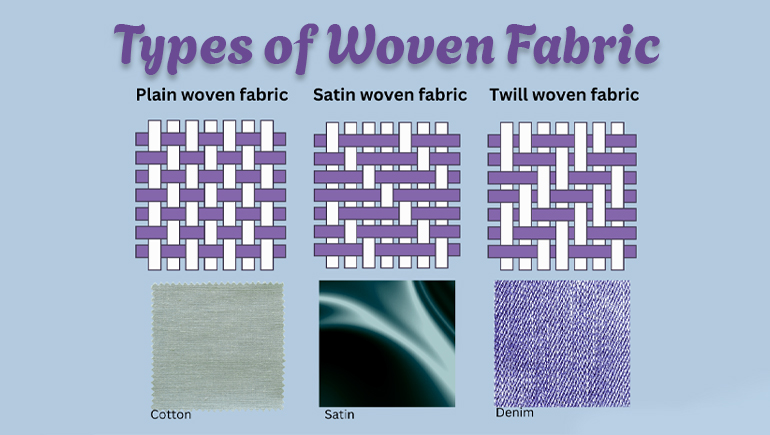
Two sets of yarns, the warp (vertical threads) and the weft (horizontal threads), are interlaced to make woven cloth. It is organized, ordered, and full of possibilities, much like a crisscross dance on a loom.
The way those threads interact is what makes weaving so magical. A new fabric with its own feel, rigidity, stretch, and charisma can be created by altering the materials, tension, or weave pattern.
Now, explore the most fascinating and significant kinds of woven fabric you will ever come across in the cut and sew field.
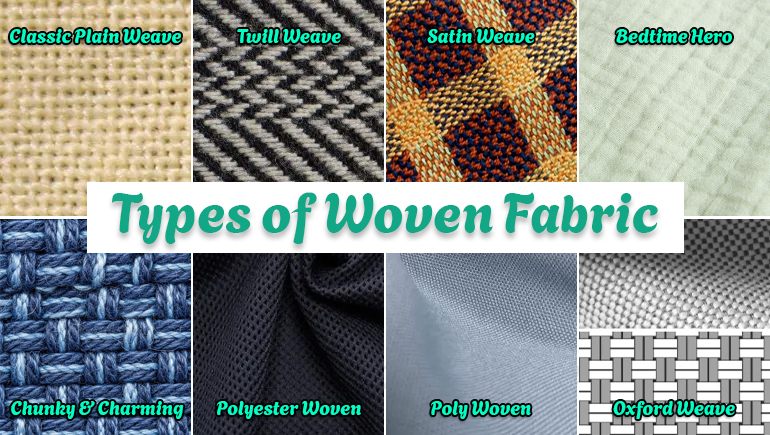
Woven fabrics are used in various contexts than you may think, from heavy-duty industrial applications to everyday wardrobe essentials. The most popular varieties of woven fabric are broken down below, along with an explanation of their distinctive qualities and the reasons they are best suited for particular uses.
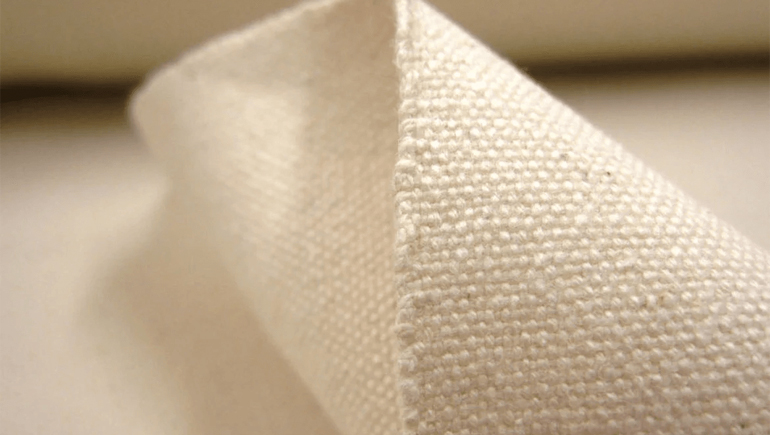
The original type of woven cloth is plain weave, which is straightforward, robust, and highly reliable. It is made by consistently crossing one warp thread over and beneath a weft thread to create a level, balanced surface that maintains its shape as time goes by. Because of its simple structure, plain weave is very adaptable and simple to work with.
Why does it function? Because it is not only reasonably priced but also durable and effective for ordinary textile use or daily wear.
Important characteristics:
Common examples:
The diagonal ribs of twill weave are clearly identifiable; consider the striking appearance of denim. Warp threads float over several weft threads in place of a rigid over-under pattern, making the fabric stronger, more flexible, and better at concealing wear and wrinkles. Twill combines function and character in a tough yet cozy way.
What makes it unique:
Popular uses:
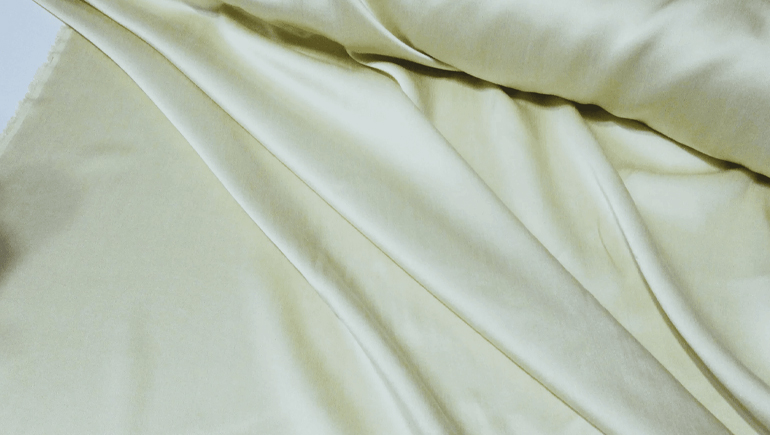
The main focus of satin weave is opulence. Because of its molecular makeup, threads can "float" over one another before linking to provide the characteristic glossy appearance and extraordinarily velvety feel. Satin offers unparalleled grace and fluidity despite its delicate nature. Moreover, it works well with evening gowns, lingerie, formal clothing, and shiny statement pieces.
Notable features:
Common fabrics:
Cotton yarns are woven in a satin-style to create cotton sateen, which has a silky texture but is still breathable and skin-friendly. What makes it shine? It is perfect for rest and relaxation since it guarantees luxurious comfort without compromising airflow.
Buckram is a stiff cotton fabric with a simple, typically loose weave that is frequently used for linings and as a supporting element in waistbands, necklines, collars, baseball caps, and bags.
Feel & features:
Perfect for:
Basket weave, which uses several strands arranged in both directions, is basically a strengthened form of plain weave. As a result, the fabric becomes more airy, textured, and pliable. It stands out because of the weave's charm and durability, which are tough yet never rigid.
Characteristics:
Used in:
The strength, color retention, and easy maintenance of polyester woven fabric make it a contemporary choice. It works effectively both alone and in combination with other fibers. Textile chameleons are polyester-woven textiles: incredibly adaptable and always evolving.
For more comfort or suppleness, it easily combines with spandex or cotton. You can take chiffon as an example.
Why it's well-liked
Commonly used for:
For practical uses like packaging and protective covers, poly woven textiles—typically polyester or polyethylene—are extensively utilized.
Key traits:
Applications:
Oxford weave produces a delicately textured, subtly speckled appearance through the use of thicker and thinner yarns. It is a favorite for smart-casual attire since it is refined without feeling pompous. It is a real wardrobe workhorse that is simple to dress up or down.
What you'll observe:
Where it shines:
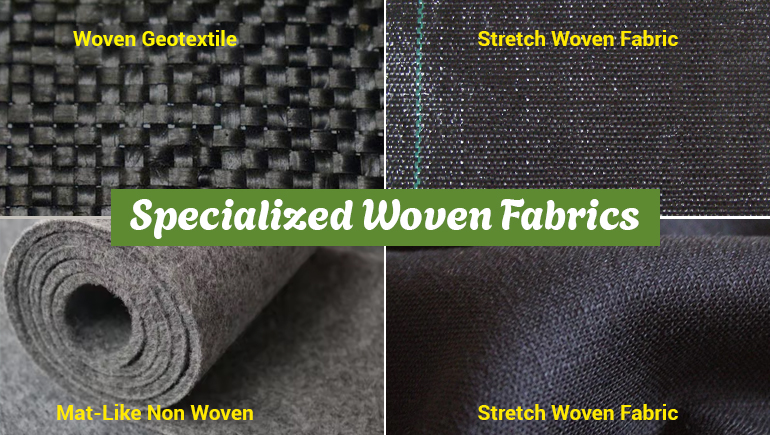
Not all woven fabrics live in closets. Some are engineered for gardens, roads, and heavy-duty performance.
Technical textiles called woven geotextiles are made to support soil, enhance drainage, and stop erosion. They are designed for durability and long-term outdoor efficiency. Strong, weather-resistant, and crucial for the stability of infrastructure are the reasons it counts.
Essential functions:
Used in:
This is made to keep weeds out while letting air and water get to the soil. It is far more practical for both residential and commercial landscaping, although it is lighter than geotextiles.
Advantages:
Ideal for:
Non-woven geotextiles are frequently likened to woven ones, even though they are not properly woven. They are created by joining fibers to form a thick, felt-like fabric that is perfect for drainage and filtration. In summary, a different structure is just as important.
Principal benefits:
Common uses:
Stretch woven textiles provide flexibility without sacrificing structure by fusing traditional weaving with elastic fibers like spandex. Get comfort and structure without having to make any compromises.
What you get:
Best for:
Since we mentioned non-woven fabrics, let’s compare them quickly:
| Feature | Woven Fabric | Non-Woven Fabric |
| Structure | Warp + weft threads | Fibers are joined rather than interwoven. |
| Strength | Extremely robust and steady | Moderately strong |
| Adaptability | Traditional drape | Less flexible |
| Typical Uses | Clothing, suits, denim | Filters, geotextiles, medical masks |
| Feel | Textured & structured | Felt-like, soft or firm |
For structured textiles, such as everyday clothing, heavy-duty equipment, fashionable coats, and cozy bed linens, woven fabrics are the best option. Industrial geotextile jobs, padding, filtering, and other engineered chores are handled by non-wovens.
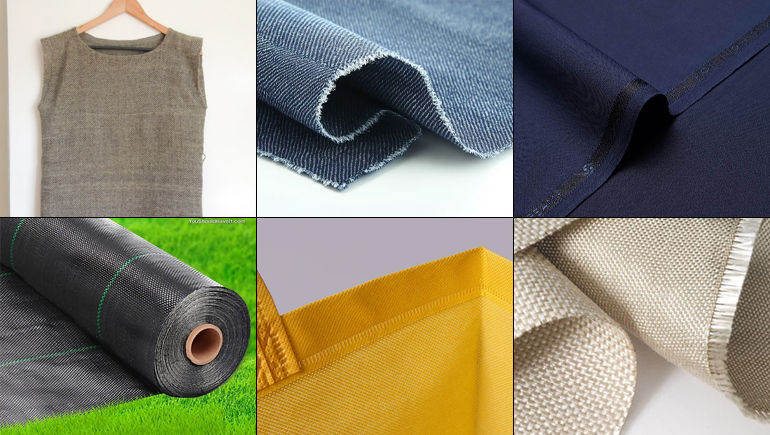
Oxford or plain weave
Twill weave
Cotton sateen or satin weave
Woven geotextiles and landscape fabric
Polyester or poly woven fabrics
Stretch-woven material
Woven fabrics are more varied and dynamic than you may have thought, ranging from luxury bedding to industrial geotextiles, from your garden to your wardrobe. They influence the way we live, work, rest, and dress. Elegance, style, function, and innovation are all connected by woven fabrics.
Are you prepared to delve even farther into the world of woven fabrics? For additional textile knowledge, fabric guidelines, and fashion inspiration, visit VEL Clothing! We can help you whether you're starting your own clothing line, selecting materials for your upcoming project, or simply adoring the feel of high-quality threads. Learn about textures, evaluate materials, and receive expert advice.